

We Are Stardust
The cosmic radiance and responsibility of being human

“Every atom in your body came from a star that exploded. And, the atoms in your left hand probably came from a different star than your right hand. It really is the most poetic thing I know about physics: You are all stardust.” ~ Lawrence Krauss, theoretical physicist and cosmologist
I was born in the mid-1950s, old enough to be aware of the polemics of the turbulent 1960s and 1970s but a little too young to participate. Though I might have wanted to be a Flower Child, that was not even a remote possibility due to my home environment and age. Nonetheless, like many people of my generation, I can still recite the lyrics to popular songs of that era verbatim.
One such rock classic is Woodstock, written by Joni Mitchell and made iconic by Crosby, Stills, Nash & Young. It is an ode to the Woodstock festival, held in August 1969 on Max Yasgur’s dairy farm in Upstate New York. The chorus can easily become an earworm, repeating incessantly in the mind:
We are stardust; we are golden.
We are billion-year-old carbon.
And we've got to get ourselves
back to the garden.
Of late, I’ve found the phrase ‘we are stardust’ quite intriguing and have done a bit of a deep dive on the subject, both the scientific and metaphysical interpretations of it. Although my scientific knowledge and understanding are admittedly limited, the metaphysical/spiritual aspects are stimulating to contemplate.
First, a little science…
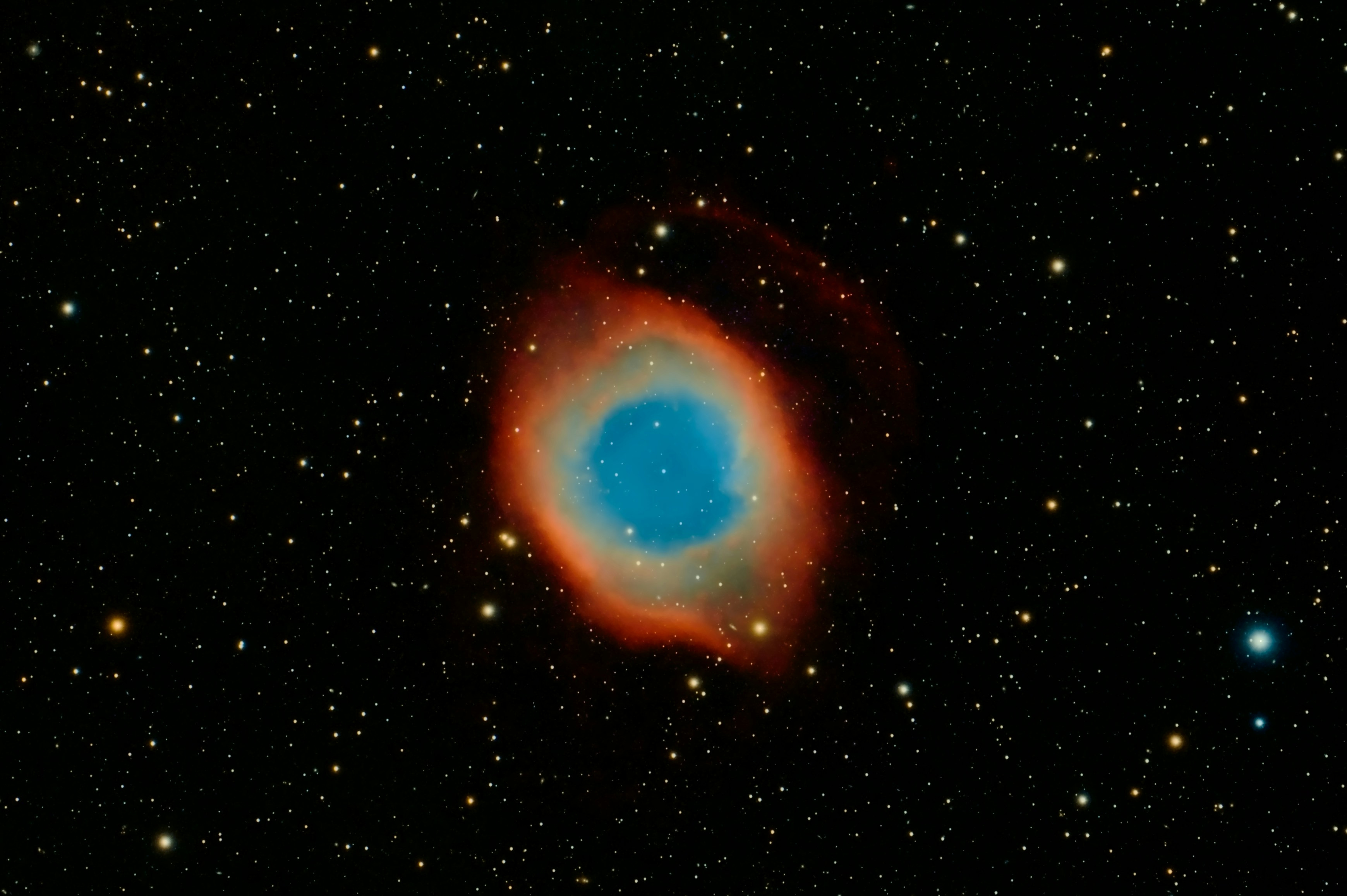
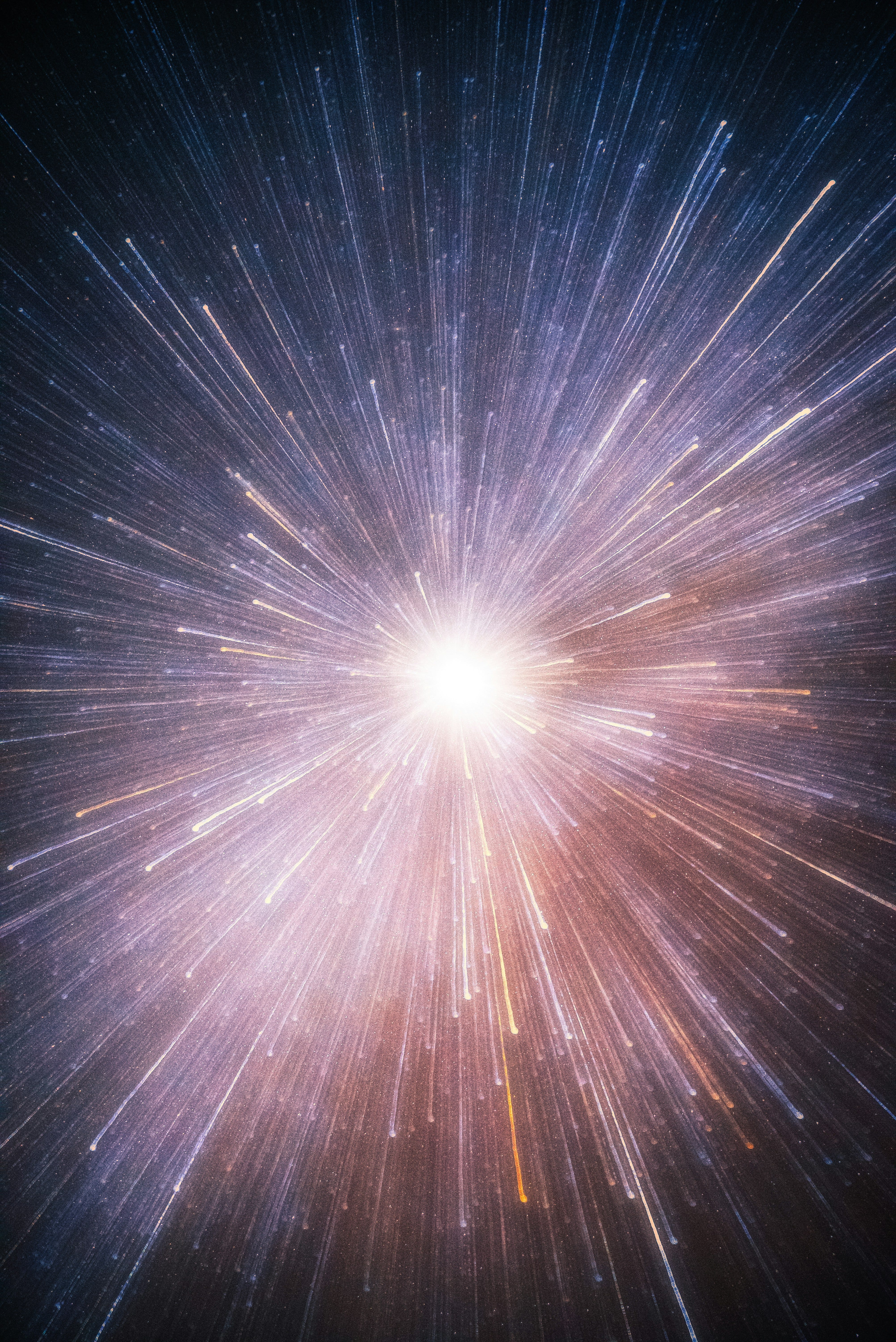
The prevailing model of the origin of the universe is the Big Bang Theory. According to this model, the universe began as a singularity—an extremely hot, dense, and infinitely small point of matter and energy. Approximately 13.8 billion years ago, a massive combustion event occurred (the Big Bang). During this explosion, the lightest elements, hydrogen and helium, were produced. These gases drew together and formed the first generation of stars. Nuclear reactions within these stars produced a few heavier elements, like iron. Bigger stars were formed. When those stars went supernova (a stellar explosion ending a star’s life), they produced even heavier elements such as carbon and magnesium. The dispersal of these elements into interstellar space created future generations of stars and other cosmological bodies and systems.
Dr Ashley King, planetary scientist at the Natural History Museum in London, England, states, “It’s very likely that there are a whole bunch of different stars that have contributed the elements we see in our own solar system, our planet, and those found within you."
So you see, we really ARE stardust!
“Every atom of oxygen in our lungs, of carbon in our muscles, of calcium in our bones, of iron in our blood - was created inside a star before Earth was born.” ~ American Natural History Museum website
“The atoms of our bodies are traceable to stars that manufactured them in their cores and exploded these enriched ingredients across our galaxy, billions of years ago. For this reason, we are biologically connected to every other living thing in the world. We are chemically connected to all molecules on Earth. And we are atomically connected to all atoms in the universe. We are not figuratively, but literally, stardust.” ~Neil deGrasse Tyson, Astrophysicist and Director of the Hayden Planetarium at the American Museum of Natural History in New York City
Now, for a less empirical, more metaphorical interpretation of creation…
There is a Jewish story about the birth of the world that originated in the 14th century. The following is an excerpt of an On Being interview in which Dr. Rachel Naomi Remen tells this tale. As you read the word ‘light’, think stardust.
“In the beginning, there was only the holy darkness, the Ein Sof, the source of life. And then, in the course of history, at a moment in time, this world, the world of a thousand thousand things, emerged from the heart of the holy darkness as a great ray of light.
And then, perhaps because this is a Jewish story, there was an accident. And the vessels containing the light of the world, the wholeness of the world, broke. And the wholeness of the world, the light of the world, was scattered into a thousand thousand fragments of light. And they fell into all events and all people, where they remain deeply hidden until this very day.”
“Now, according to my grandfather, the whole human race is a response to this accident. We are here because we are born with the capacity to find the hidden light in all events and all people, to lift it up and make it visible once again, and thereby to restore the innate wholeness of the world. This is a very important story for our times, that we heal the world one heart at a time. And this task is called ‘tikkun olam,’ in Hebrew — “restoring the world.
…Tikkun olam is the restoration of the world. And this is, of course, a collective task. It involves all people who have ever been born, all people presently alive, all people yet to be born — we are all healers of the world.
And that (understanding of the) story opens a sense of possibility. It’s not about healing the world by making a huge difference. It’s about healing the world that touches you, that’s around you.”
“Might it be the discovery of a distant civilization and our common cosmic origins that finally drives home the message of the bond among all humans. Whether we're born in San Francisco or Sudan or close to the heart of the Milky Way Galaxy, we are the products of a billion-year lineage of wandering stardust. We, all of us, are what happens when a primordial mixture of hydrogen and helium evolves for so long that it begins to ask where it came from.” ~ Jill Tarter, Astronomer and Former Director of SETI
You might wonder where I am going with all of this?
Well, I’m glad you asked! I would like you to consider the pre-Big Bang singularity and the Great Ray of Light in the Jewish parable as God. You don’t have to call this light energy God; if you prefer, you can call it the One, Source, Consciousness, or, as one person I heard recently say, you can call it Olivia. In any case, there was an Original Wholeness.
And, what if the Original Wholeness wanted to know itself, so in an act of self-giving love (the Big Bang), it dispersed itself into everything? The One Light became infinite lights, a spark of which is in everything and everyone – stardust particles permeating all of creation. And, what if the way the One Light gets to know itself is the process through which all the individual stardust sparks find their way back to being a unified whole (an integrated singularity)?
I think St. Augustine was on to something when he said, “You have made us for yourself, O Lord, and our hearts are restless until they rest in You.” We are fractals of the whole; our essence is the same as that of the One. And, as a conscious species, we will not rest until we are realigned with that Original Wholeness. So, as the song says, “We’ve got to get ourselves back to the garden.” And every little piece of stardust gets to participate!
“Every single person has the divine light within; every single person radiates the life of God. When we awaken to the reality of God as the deepest center of our existence, we live in hope that the world can be recreated in justice, that the future will be different. When we live in God, we live in the future; we dream, hope, create, and travel lightly on this cosmic journey. The future depends on our choices in the moments we are given. We can help build up this world and love and radiate the glory of God or we can tear it into pieces in a bloody battle for survival.” ~ Ilia Delio, The Not-Yet God: Carl Jung, Teilhard de Chardin, and the Relational Whole, pg. 142.
We each make a choice about whether or not to take on the responsibility of healing the world and returning to Original Wholeness. The way I choose to do it may not be the same as yours. But that is the beauty of the process. We are each unique configurations of radiant stardust; we just need to figure out how to let our magnificence shine so the world (universe) can be restored. We are all healers of the world.
I know this edition might be a stretch for some. Obviously, my spiritual journey to understand my place in the cosmos has been a long and winding one (and I’m not finished yet!). I’ve reached a point where I don’t necessarily see a conflict between science and spirituality. This convergence has not lessened my reverence for the Holy. In fact, if anything, it has deepened my regard for the sacred in all people and all things.
I’d love to hear how your spirituality has evolved, so please feel free to leave a comment.
If you enjoy my content, please consider sharing this essay with others who might be interested.
Peace on the journey,
Donna
“Never forget your real identity. You are a luminous conscious stardust being forged in the crucible of cosmic fire.” ~ Deepak Chopra
And in case you need a trip down memory lane, here’s the Crosby, Still, Nash, & Young version of Woodstock:
Provided to YouTube by Rhino Atlantic
All is stardust, all is golden. To the Holy One we are beholden. And we’ve got to walk each other back to the garden. (Revised today! Thanks for the inspiration.)
This is very profound...thank you. I don't see a conflict between science and spirituality. Like you, I believe they enhance one another. I often think about what it would look like if we could all see each other through God's eyes, the eyes of love...if we could see the divine spark in every human being, how different the world would be.